

Is a Floating Dock Right for Your Waterfront? Pros and Cons
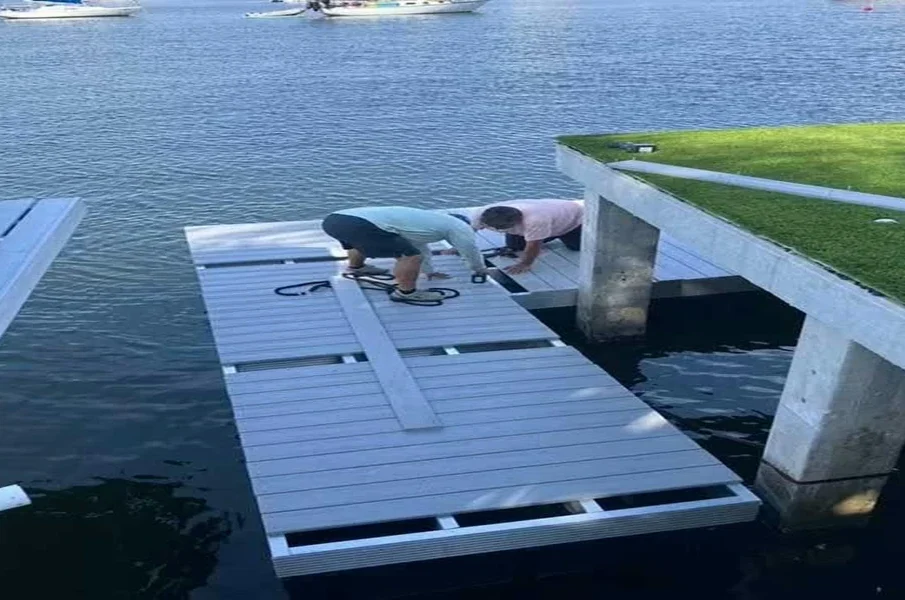
Homeowners often ask whether a floating dock is right for their waterfront. The answer depends on how a floating dock works and on the conditions at the site.
A floating dock rests on sealed floats, and while pilings, cables or stiff arms hold it in place, it still moves up and down with the water. Because the deck stays at about the same height above the surface at every tide, stepping onto a boat feels the same at low water as at high water, and kids, older adults and pets get on and off more easily.
Floating docks also work in deep water. A fixed dock in deep water needs very long pilings, whereas a floating dock only needs a suitable anchoring system. Many floating systems are built in sections, so sections can be added, moved or replaced later. Kayaks, paddleboards and jet skis launch easily from the low deck.
Some conditions make floating docks harder to use. In very shallow water, the floats can rest on the bottom at low tide. In open water with big waves or heavy boat traffic, the dock moves more and needs heavier floats and stronger anchors. A floating dock also needs a hinged gangway to reach land, and the gangway angle changes as the tide rises and falls.
Tidal canals, lakes with changing levels and marinas are common places for floating docks. Very shallow or rough sites may suit a fixed dock better. Some properties use a short fixed pier from land with a floating section at the end. Docks built over the water need permits in either case.
Supreme Floating Docks is a veteran-owned company in Fort Lauderdale that designs, builds and installs floating docks, gangways and marina systems, and it reviews each site to decide which setup fits.


