

Living Room Light: Designing for Multiple Uses and Times of Day
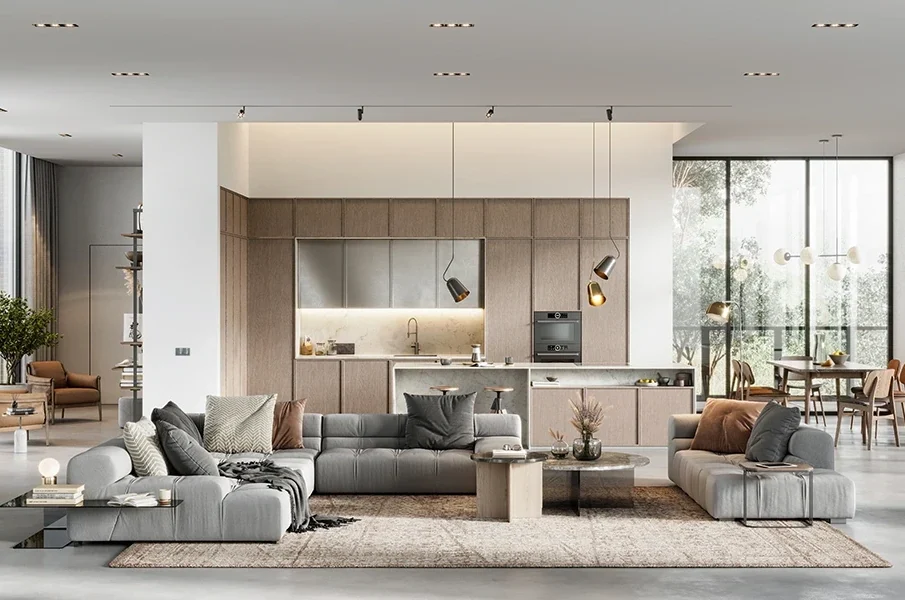
Why Living Rooms Need Layered Lighting
The living room serves more different activities than any other room in the home, and a single overhead fixture cannot serve them all adequately. Morning coffee in natural light, afternoon reading, children doing homework, casual conversations in the evening, watching television, entertaining guests – each of these activities has different lighting requirements that a single fixed-output overhead cannot accommodate.
Layered lighting in a living room – overhead ambient light, table and floor lamps for task and reading light, accent fixtures for architectural or art illumination – creates the flexibility to adjust the room for different activities without requiring different rooms. The combination of a central fixture on a dimmer, reading lamps in the seating areas, and accent lighting for the room’s features addresses the full range of activities at appropriate light levels.
Living room light planning should start with identifying the activities the room supports and the light quality each requires, then designing the fixture and control scheme that provides those qualities without compromise. This activity-first approach produces a more functional result than selecting fixtures first and hoping they serve the room’s needs.
Building the Living Room Lighting Layer by Layer
The ambient layer – provided by the overhead fixture – establishes the room’s baseline light level and visual character. A ceiling fixture on a dimmer provides the full range from full illumination to soft ambient light, allowing the overhead layer to contribute appropriately to the room at different times of day and for different activities.
Task lighting in the seating areas – floor lamps beside reading chairs, table lamps at the ends of sofas – provides the directed, adequate illumination that reading and focused tasks require without lighting the entire room at task level. These fixtures should be bright enough to read comfortably without creating the room-wide illumination that is only appropriate for active, full-group use.
Accent lighting – directed at art, architectural features, bookshelves, or plants – creates the visual interest and depth that ambient and task layers alone do not provide. Small directional spotlights, picture lights above art, or LED strip lights inside bookshelves are the accent layer options that transform a room from adequately lit to atmospherically designed.
Energy Star certified fixtures across all three layers confirm efficiency that matters for fixtures operating for extended periods in the home’s most-used room.
Control Systems That Make Layered Lighting Practical
Multiple light sources in a living room require multiple control points – which can create the practical problem of too many switches to manage intuitively. Smart lighting systems that allow scenes to be set – “reading mode” that activates reading lamps at appropriate levels, “evening mode” that dims the overhead and turns on accent lighting, “entertaining mode” that creates a full, balanced room – convert a complex multi-switch system into single-action control that is more practical for daily use.
Voice control and scheduling add the convenience layer that makes smart lighting worth its cost for living rooms that are used across many different activities throughout the day. Setting a schedule that automatically shifts the living room from daytime to evening lighting eliminates the daily manual adjustments that multiple light sources otherwise require.
The investment in a smart lighting system for a living room is most justifiable in rooms that are genuinely used differently throughout the day – not just in the evening. Rooms with daytime use by people who work from home, children who use the space after school, and evening social use have the multi-mode requirement that smart lighting addresses most meaningfully.


